+86 13933019359
+86 13933019359
Apr. 22, 2026
The Production Process of Plastic Stretched Netting
Additives: UV stabilizers are added to prevent degradation from sunlight (essential for outdoor use), along with color masterbatches and anti-oxidants.
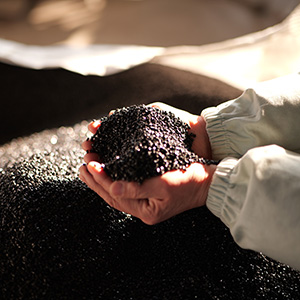
2. Extrusion and Initial Formation
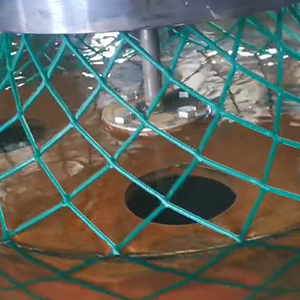
The mixed resin is fed into an extruder, where it is heated and melted (typically between 190°C and 250°C).
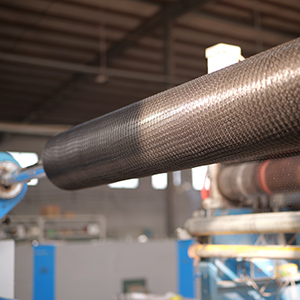
The Die Head: The molten plastic is forced through a specialized rotating die. The relative motion of the die parts creates the intersecting strands that form the initial "mesh" structure.
Quenching: As the hot plastic mesh emerges, it is immediately cooled in a water bath or over a chilled mandrel. This solidifies the plastic into a "pre-stretched" tube or sheet.
3. Molecular Orientation (The Stretching Phase)
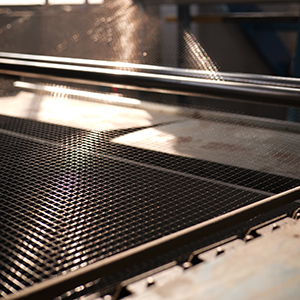
Machine Direction (MD) Stretching: The netting passes through a series of rollers. Each successive roller rotates faster than the previous one, pulling the mesh lengthwise.
Transverse Direction (TD) Stretching: For bi-axially oriented nets, the material is fed into a "tenter frame," where mechanical clips pull the edges of the net outward in a heated oven.
Biaxial Orientation: When stretched in both directions, the netting gains high tensile strength and dimensional stability in both length and width.
4. Heat Setting and Annealing
once stretched to the desired dimensions, the netting must be "set" to prevent it from shrinking back to its original size.
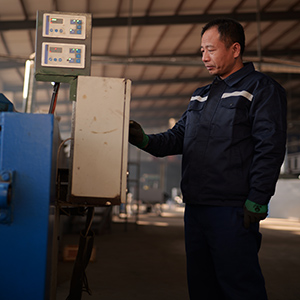
5. Slitting and Winding
The final step prepares the netting for the end-user.
Trimming: The uneven edges of the net are trimmed off.
Slitting: Large master rolls can be slit into narrower widths depending on the application (e.g., small rolls for meat packaging or wide rolls for crop protection).
Winding: The finished netting is wound onto cardboard or plastic cores, inspected for quality, and packaged.
Previous: good quality plastic netting
+86 13933019359
300 meters east of YouZiCun,Anping County, Hengshui City, Hebei Province, China